

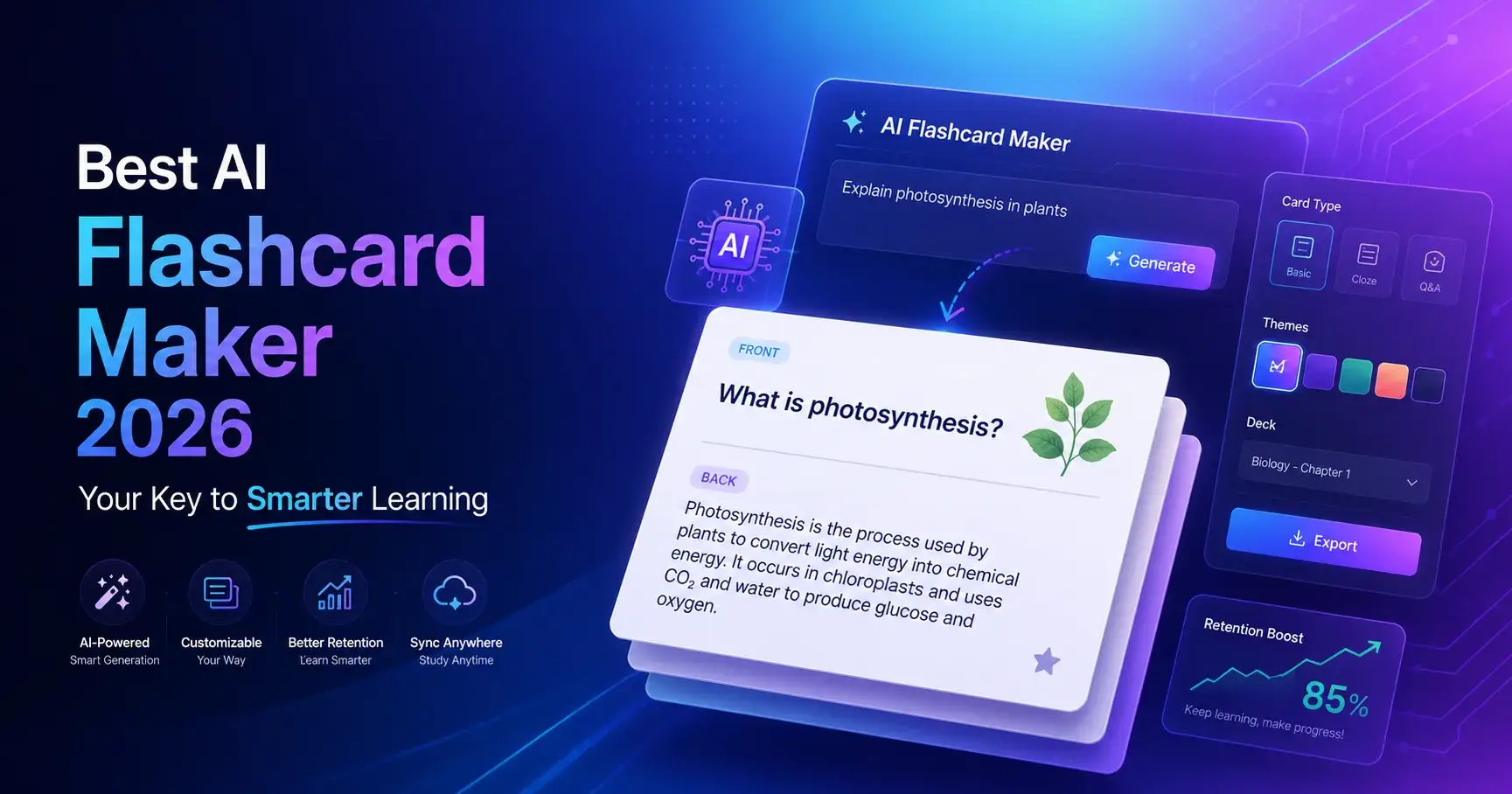
In the evolving landscape of education, learning methods are undergoing a significant transformation driven by cognitive science and digital innovation. One of the most impactful developments in this space is the use of flashcards, which has redefined how learners interact with information through visual structure, repetition, and active recall. These systems are no longer simple revision tools but have become advanced learning frameworks that support memory retention, comprehension, and long-term academic performance.
Statistical trends in modern study behavior consistently show that visual and interactive learning formats improve engagement and recall accuracy. As learners move away from passive reading, structured visual systems are emerging as a preferred method for efficient and sustainable learning outcomes.
Why are visual flashcard systems becoming essential in modern education?
Visual flashcard systems are becoming essential because they align with how the human brain naturally processes and stores information. The brain responds more effectively to visual cues than plain text, making it easier to encode and retrieve knowledge.
These systems transform complex concepts into simplified visual representations, improving understanding and reducing cognitive overload. Learners can quickly associate ideas with images, patterns, or structured layouts, which enhances memory retention significantly.
Statistically, visual learning methods improve recall rates by making information more memorable and easier to retrieve during assessments or real-world application.
How do flashcard systems improve learning efficiency?
Flashcard systems improve learning efficiency by breaking down large volumes of information into smaller, focused units. This allows learners to study more effectively without feeling overwhelmed by lengthy content.
Instead of revising entire chapters repeatedly, learners focus only on key concepts and definitions. This targeted approach reduces unnecessary study time while improving comprehension.
The structured repetition embedded in flashcard systems ensures that information is reviewed at optimal intervals, maximizing retention with minimal effort.
What role does visualization play in strengthening memory?
Visualization plays a crucial role in strengthening memory because it helps the brain create stronger associations between concepts. When information is presented visually, it becomes easier to remember and recall.
Visual cues act as mental triggers, allowing learners to retrieve information faster during exams or practical use. This method reduces dependency on rote memorization and promotes deeper understanding.
Research in learning behavior indicates that combining visual elements with active recall significantly enhances long-term memory retention.
Why is active recall important in flashcard-based learning?
Active recall is important because it requires learners to retrieve information from memory rather than simply reviewing it. This retrieval process strengthens neural connections and improves retention over time.
Flashcard systems are specifically designed to encourage this method by presenting prompts that require immediate response. This active engagement ensures that learners are continuously testing their knowledge.
Statistical learning models show that active recall is one of the most effective techniques for improving exam performance and knowledge durability.
How does spaced repetition support better learning outcomes?
Spaced repetition supports better learning outcomes by revisiting information at strategically timed intervals. This method prevents forgetting by reinforcing knowledge just before it fades from memory.
Instead of overloading the brain with repetitive study sessions, spaced repetition distributes learning over time. This approach improves long-term retention and reduces cognitive fatigue.
Learners who use spaced repetition consistently demonstrate higher accuracy in recall and better retention of complex subjects.
Can flashcard systems adapt to different subjects and learning styles?
Yes, flashcard systems are highly adaptable and can be used across a wide range of subjects and learning styles. Whether it is science, language learning, or professional training, flashcards can be customized to fit the content.
Visual learners benefit from images and diagrams, while textual learners prefer concise definitions and explanations. This flexibility ensures that every learner can engage with the material in a way that suits their cognitive preferences.
Such adaptability makes flashcard systems a universal tool for modern education.
What makes digital flashcards more effective than traditional study methods?
Digital flashcards are more effective because they combine structure, interactivity, and adaptability in one system. Traditional study methods often rely on passive reading, which leads to lower retention rates.
In contrast, digital flashcards require active participation, ensuring that learners are constantly engaged with the material. They also allow for randomization of content, which prevents predictable memorization patterns.
This dynamic approach improves cognitive engagement and leads to stronger long-term understanding.
How do flashcard systems improve exam preparation?
Flashcard systems improve exam preparation by simulating real testing conditions. Learners must recall answers without external support, which mirrors actual exam environments.
This practice builds confidence and improves response accuracy under pressure. It also helps identify weak areas that need further revision.
Statistical evidence from learning behavior patterns shows that students who use active recall techniques perform better in timed assessments.
Why is consistency important in flashcard-based learning?
Consistency is important because memory retention improves through regular reinforcement. Irregular study habits often lead to incomplete knowledge and weak recall ability.
Flashcard systems encourage consistent study patterns through structured repetition and progress tracking. This ensures that learners remain engaged over time without feeling overwhelmed.
Consistent learning leads to stronger cognitive retention and improved academic outcomes.
How do visual flashcards enhance engagement and motivation?
Visual flashcards enhance engagement by making learning more interactive and less monotonous. The use of colors, diagrams, and structured layouts keeps learners interested and focused.
This increased engagement naturally improves motivation, as learners can see their progress more clearly. Positive reinforcement from correct responses encourages continued practice.
Over time, this creates a productive learning cycle that sustains long-term academic discipline.
What is the impact of flashcard systems on long-term knowledge retention?
Flashcard systems have a strong positive impact on long-term knowledge retention because they combine repetition with active recall and visualization. These three elements work together to strengthen memory pathways.
Learners are able to retain information for longer periods without frequent re-study sessions. This improves overall learning efficiency and reduces the time needed for revision before exams or practical application.
Statistical learning insights consistently show improved retention rates among users of structured flashcard systems.
How do analytics improve flashcard learning performance?
Analytics improve flashcard learning performance by providing insights into progress and accuracy. Learners can see which topics are well understood and which require additional focus.
This data-driven approach allows for smarter study planning and better time management. Instead of random revision, learners can prioritize weak areas effectively.
Such insights lead to more efficient learning and improved academic performance over time.
Conclusion
Modern education is rapidly evolving toward structured, visual, and interactive learning systems that prioritize efficiency and long-term retention. Flashcard-based systems have emerged as a powerful solution by combining visualization, active recall, and spaced repetition into a single learning approach. These methods significantly improve comprehension, engagement, and memory strength. As learners continue to seek smarter ways to study, visual flashcard systems will remain a key driver in redefining academic success and building stronger, more efficient learning habits for the future.